
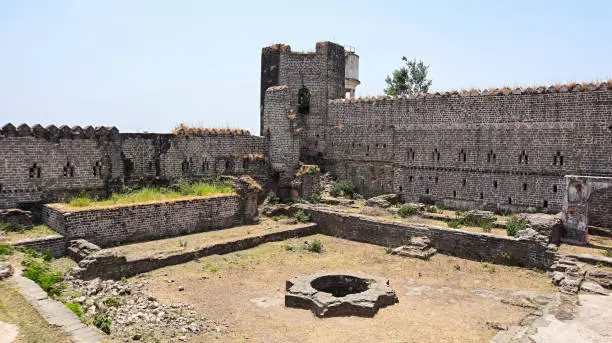
Asirgarh Fort, Madhya Pradesh – The Gateway to the Deccan
One of the most alluring of India’s numerous ancient forts is Asirgarh Fort tucked away within the Satpura ranges, near the city of Burhanpur in Madhya Pradesh. Dramatic high up above the vista of the surrounding hills, the fort was strategically sited above what represented an important highway connecting North India to the Deccan and its military value under numerous dynasties consequently meant it became a powerful center.
Asirgarh Fort, popularly known as the ‘Gateway to the Deccan’, has had a long journey through different regimes and battles, witnessed several political upheavals and the ascendance and downfall of various rulers for a millennium, the history of which is preserved in its immense stonewalls and ancient gateways, temples, mosques and ruins.
A Fort Built for Strategy
A real strength for Asirgarh Fort was the location of the fort. The fort is on the summit of a very high hill which dominates two extremely crucial lines of communication from north to south India. Whosoever wishing to visit the Deccan via this region was compelled to pass this strategic vicinity closely.
Because of it’s high location it was afforded a measure of protection and could guard all approaches across the plains. Thick stone walls and stout gates made it extremely difficult to attack and a strong military base was formed.
History of Asirgarh Fort
There is ancient history in the fort of Asirgarh. Historically, it is said to be the reign of Asa Ahir on whom this fort is believed to be named. Later it fell into the hands of various rulers of regional power.
Faruqi rulers of Khandesh were responsible for developing and fortifying the fort. In later times, Mughal rulers interested in the fort because of its tactical importance:
Mughal emperor Akbar besieged Asirgarh Fort and captured it in the 17 th century following a prolonged battle and a long struggle to secure Khandesh and form an improved route through to the Deccan.
Architecture and Structures
A large plateau hill is covered by Asirgarh Fort. The complex houses various historical monuments, walls being of uneven design to encircle the hill and act as the forts defenses. In the fort are found traces of old buildings, doorways, religious edifices, water devices, etc. In particular we note the Asirgarh Fort Mosque-a structure ofIslamic tradition built over the fort during the time when its relevance was enhanced and extended, by added structures influenced by Islamic art and architecture.
It also houses a temple dedicated to the god Shiva and how over many years various religious elements incorporated themselves within the fort, due to its prolonged historical importance and development.
The Legend of Ashwatthama
Among the popular legends associated with Asirgarh Fort that of Ashwatthama, one of the greatest warrior heroes of the Hindu epic Mahabharata.
As per the popular belief Ashwatthama visits the temple of Shiva located in the fortress to offer his prayers, there are claims and legends which state that flowers are discovered at the temple in the morning.
Although the tale is not backed by any historical evidence, it renders a mystic aura to the fort. This makes Asirgarh especially enticing to those who are entranced by the many myths and legends of India.
Exploring Asirgarh Fort
You have to drive through the country surrounding Burhanpur and then ascend towards the historical hilltop fort. On arriving at the fortress the country opens out.
Exploring the ancient gateways and ramparts evokes a strong sense of the immense scale of the fortress. Combined with the time-weathered architecture and wild countryside, this is a distinct feel from those much busier historical sites across India.
Photographers will particularly enjoy the high vantage point; the walls, gateways and landscapes are quite attractive here, and the light changes dramatically during the day.
Why Visit Asirgarh Fort?
Asirgarh Fort- For travelers that are looking to get a taste of history and avoid the typical tourist throngs, this fort is the right place. It is somewhat unknown compared to the major Indian forts, making it a great add-on to any road trip in Madhya Pradesh.
The fort has something for all types of travellers: be it the history buffs, the photographers (who can capture its beautiful setting), or the adventure enthusiasts. You can walk through its old structures or experience the thrill of hiking the rocky hill.
Its association with the Deccan and the Mughal past, combined with its legend about Ashwatthama, further piques your interest.
Best Time to Visit
Moderate periods between October to February would typically be easier for sight-seeing around Asirgarh Fort. During those months, the weather is favorable for walking through the larger fort and looking at vistas. Monsoons will make the country a much greener area however; use caution when walking, the grounds will probably be slippery.
Final Thoughts
Asirgarh Fort is not just about being an old military bastion, but an encapsulation of History, Architecture, Geography & Folklore. From the very positioning in the Satpura range to its association with the Mughals and its deep and lingering connection with the legend of Ashwatthama, the fort is a testament to India’s composite past.
This place holds a great deal of relevance for those with a yearning for ruins of old forts, unexplored historic spots and offbeat travel destinations in India, and in that regard; I am strongly recommending it to every traveler out there with the same interest. For all these travel freaks who seek the paths less-traveled, these grand ruins on top of the hill, provide a memory for a lifetime for anyone who visits beyond the country’s tourist hot-spots.
Ideal for: Lovers of History, Photographers, Explorers, Architecture connoisseurs, Adventure lovers, offbeat traveler.